FOR COMMERCIAL AND INDUSTRIAL FACILITIES
Commercial Roof Assessments After Hail and Wind
After hail or high wind, a commercial roof can look fine from the lot and still carry bruises, punctures, or wet insulation. dGEN Energy Partners sends licensed crews onto the roof to mark what the storm did, photograph it, test the assembly, and leave the owner with a written record — before a claim is filed or a repair is chosen.
This page covers how our team runs that work. For installation, coatings, maintenance, and ongoing roofing support, see Roofing Solutions.
How our crews work a storm-damaged roof
1. Survey the property.
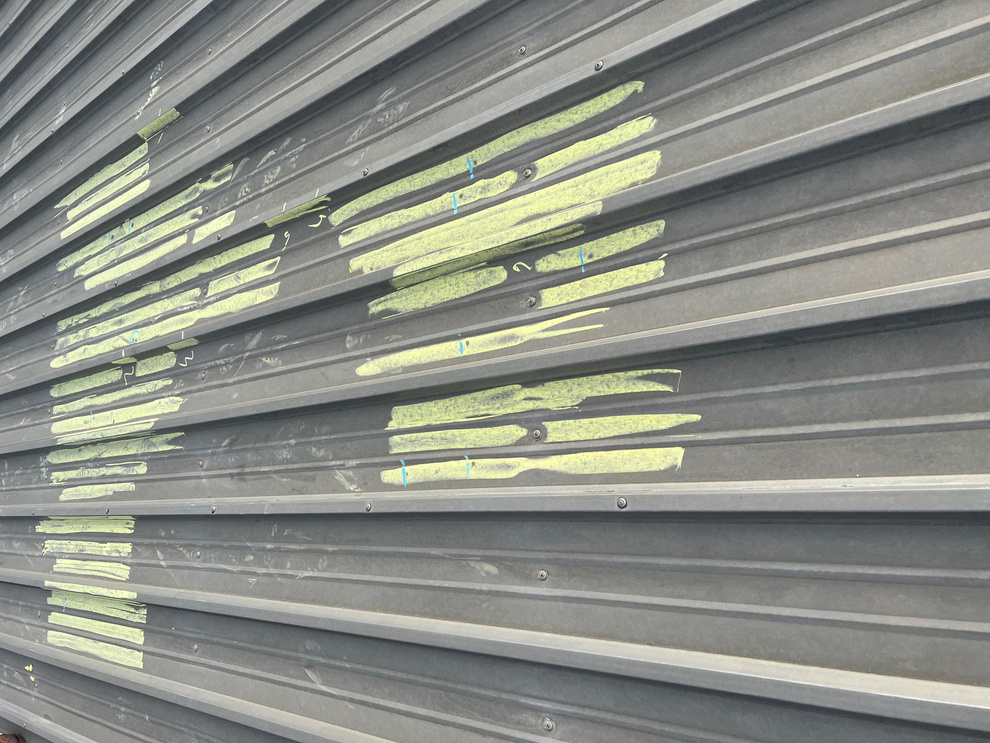
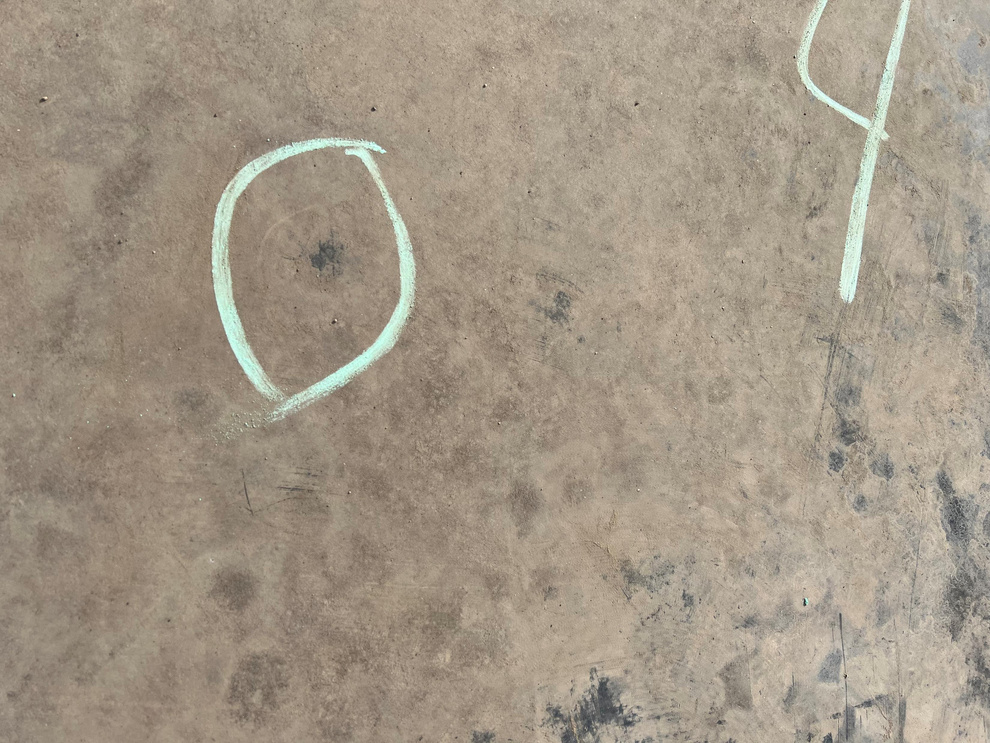
The team walks the building, every roof field, the flashings, and rooftop equipment. Each impact is chalked so it can be counted and photographed.
2. Build a complete photo file.
Close-ups of marked hits sit alongside wide shots of the roof, so the condition of the system is in the file and not only in a field notebook.
3. Sample the roof assembly.
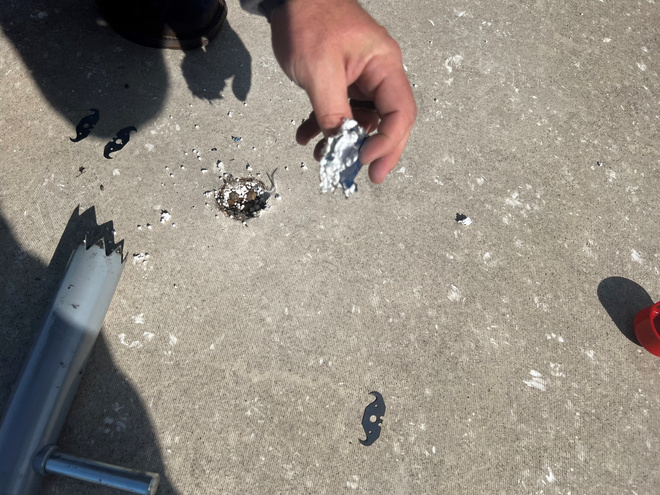
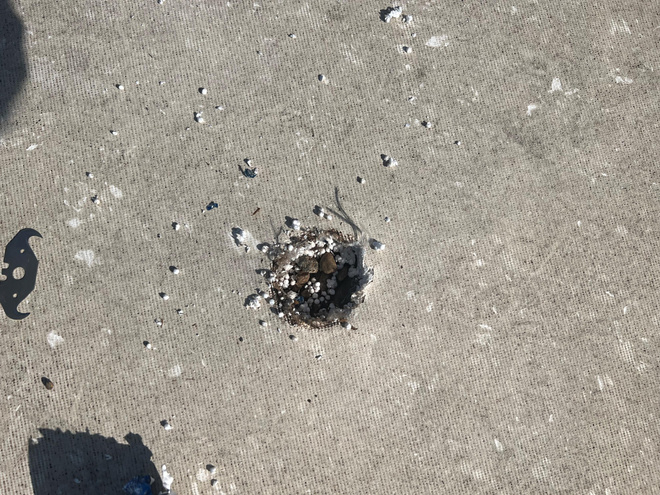
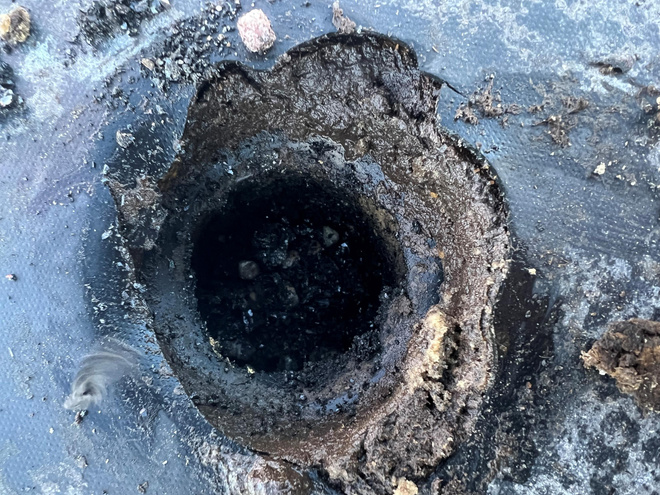
A core cut shows how many layers are in place, whether moisture has already entered the system, and what a repair or replacement would have to deal with.
4. Hand over a written package.
Measurements, a weather timeline, a cost analysis, and recommended next steps are compiled so the owner has something concrete to work from.
Why a parking-lot look is not enough
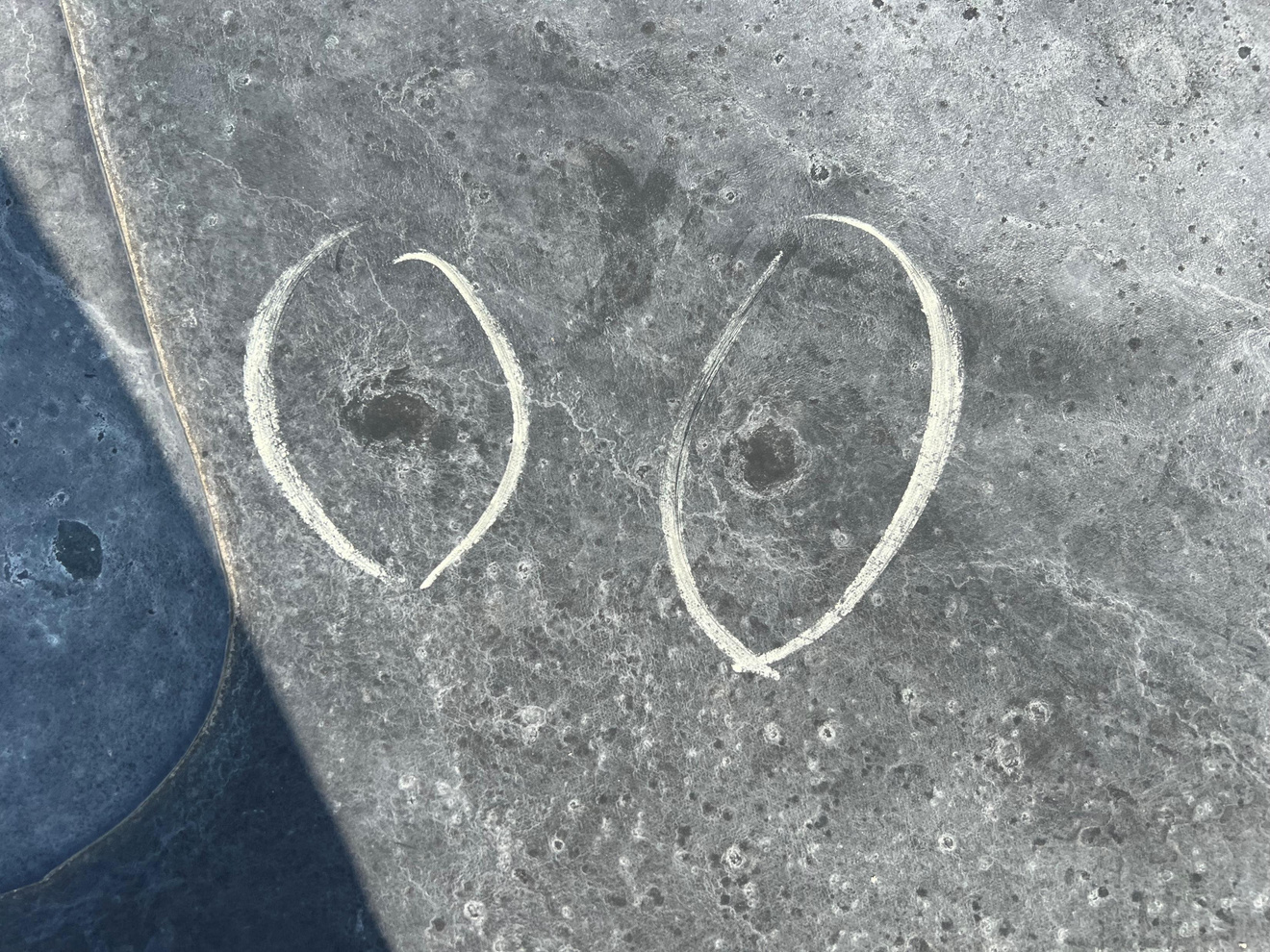
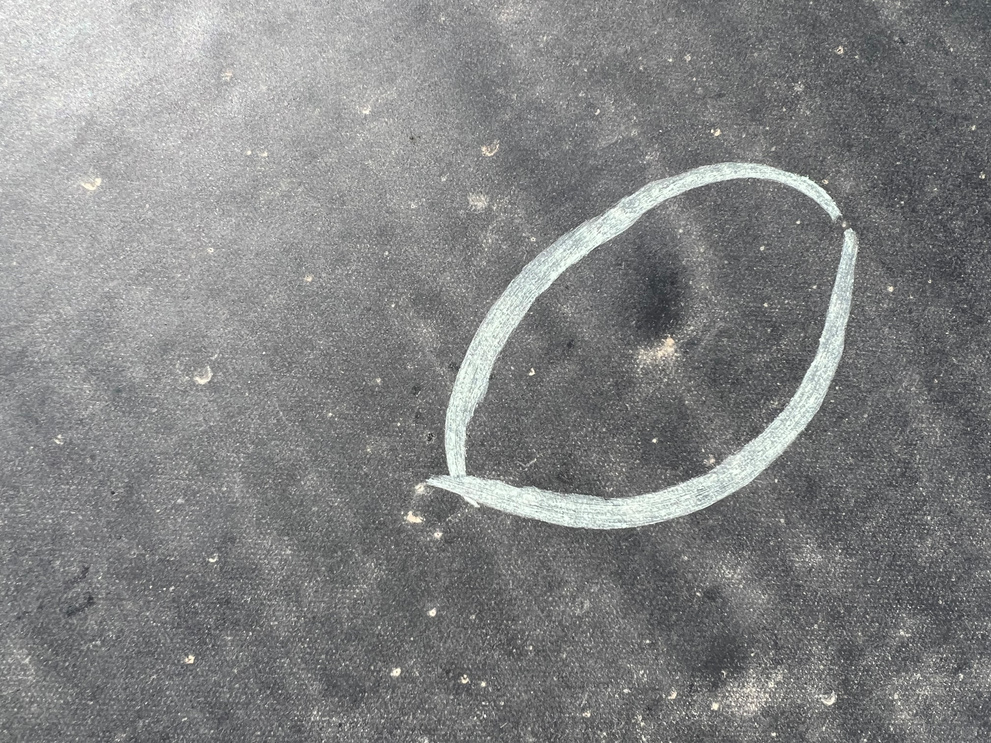
Storm evidence is often nearly invisible until someone is standing on the membrane or the metal panel. A bruise in a single-ply sheet, a crease along a metal rib, or a soft spot underfoot can all be missed from the ground. Crews mark each impact with chalk so it can be seen, counted, and included in the photographs.
A few hits on one area also do not describe the whole building. The review covers every roof field, the flashings, and the equipment that may have taken the same weather.
Seeing the roof in one aerial frame
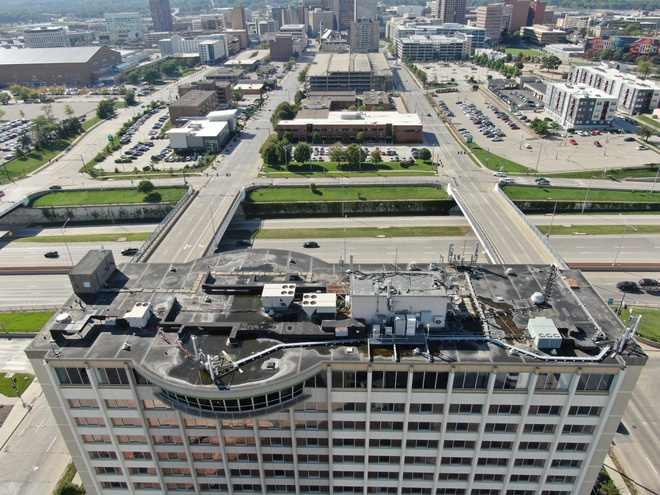
From the air, the team can see how the roof is organized — drains, units, and the way impacts cluster across fields — in a single frame that a slope-by-slope walk cannot provide. That overhead view is filed with the close-up chalk photographs.
A drone pass over a commercial roof during an assessment.
Reading the roof from the inside out
A core sample is a small opening through the membrane and insulation. It answers practical questions before anyone commits to a patch or a tear-off: how the system was built, whether water is already in the layers, and what a crew would encounter if the roof has to come off.
Those findings matter for the repair-or-replace decision, and they also matter if a new roof might later carry a solar array. When both are on the table, they can be scoped together. See Solar Solutions for how that work is structured.
The written record that leaves with the owner
Field work is only useful if it becomes a file an owner, a facility manager, or an insurance reviewer can actually use. A typical package from dGEN includes:
1. Measured area and layout.
Roof size and configuration, often taken from an aerial survey such as EagleView.
2. A weather and storm timeline.
Recent hail and wind events lined up with the conditions found on the roof.
3. A line-item cost analysis.
The scope is often priced in Xactimate so insurance reviewers can read it in a tool they already use.
4. Notes from adjuster meetings.
Those conversations are written down and kept with the rest of the file, not left only in memory.
5. Clear options for what follows.
Repair, replacement, or a roof scoped together with solar when that is the better path for the building.
dGEN is a licensed contractor, including Florida Certified General Contractor CGC1542104 and Certified Roofing Contractor CCC1338053. Details and verification links are on our Licenses page. Examples of completed work are in our Portfolio.
Request an assessment from our team
If a storm has you questioning the condition of a commercial roof, or you want a documented file before you talk with a carrier, dGEN can walk the property and tell you what we find.
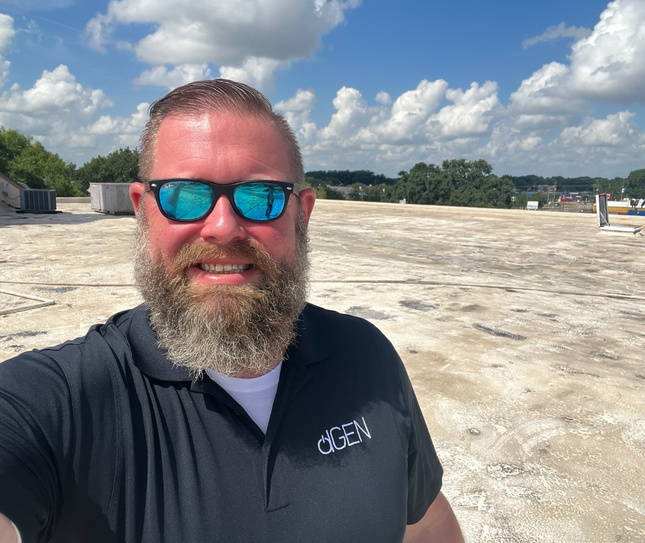
Walt Jordan, Chief Revenue Officer, is available as a first point of contact, along with the rest of our roofing team.
Or use the contact form. You can also review Roofing Solutions.